How Online Stores Can Survive Expensive Traffic in 2026
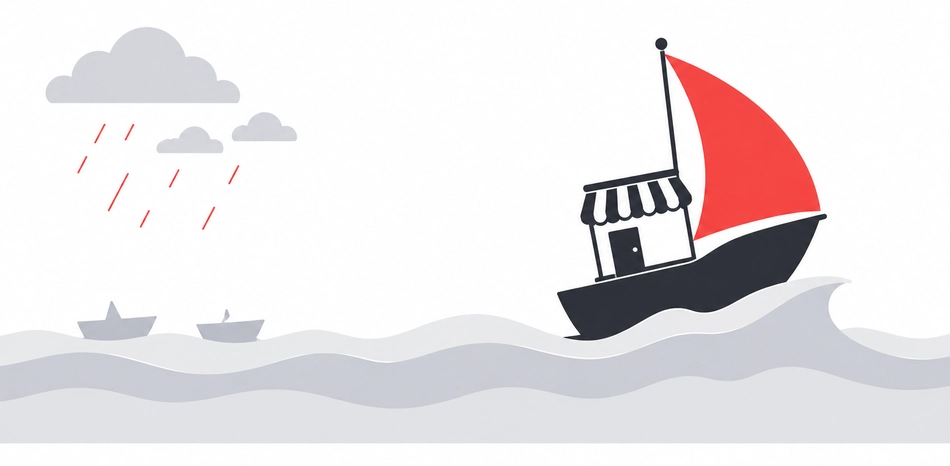
The cost of acquiring a customer in e-commerce grew by almost a third over the past year. According to E-Promo Group (an analysis of more than 99,000 performance campaigns), CPA in e-commerce in Q4 2025 was 32.9% higher than a year earlier, and 9.7% higher than the previous quarter. The forecast for 2026: another 15-20% increase.
Here's what's telling. Across all industries, average CPA growth in 2025 was 16.2%, while cost per click (CPC) rose only 5.1%. Clicks barely got more expensive. The result did. That means a smaller share of visitors actually convert into orders: you're paying roughly the same, but getting fewer customers.
That's the premise this whole article is built on. What follows isn't about paying less for traffic. It's about how to stop wasting the traffic you've already paid for.
Why You Can't Just Turn Off the Ads
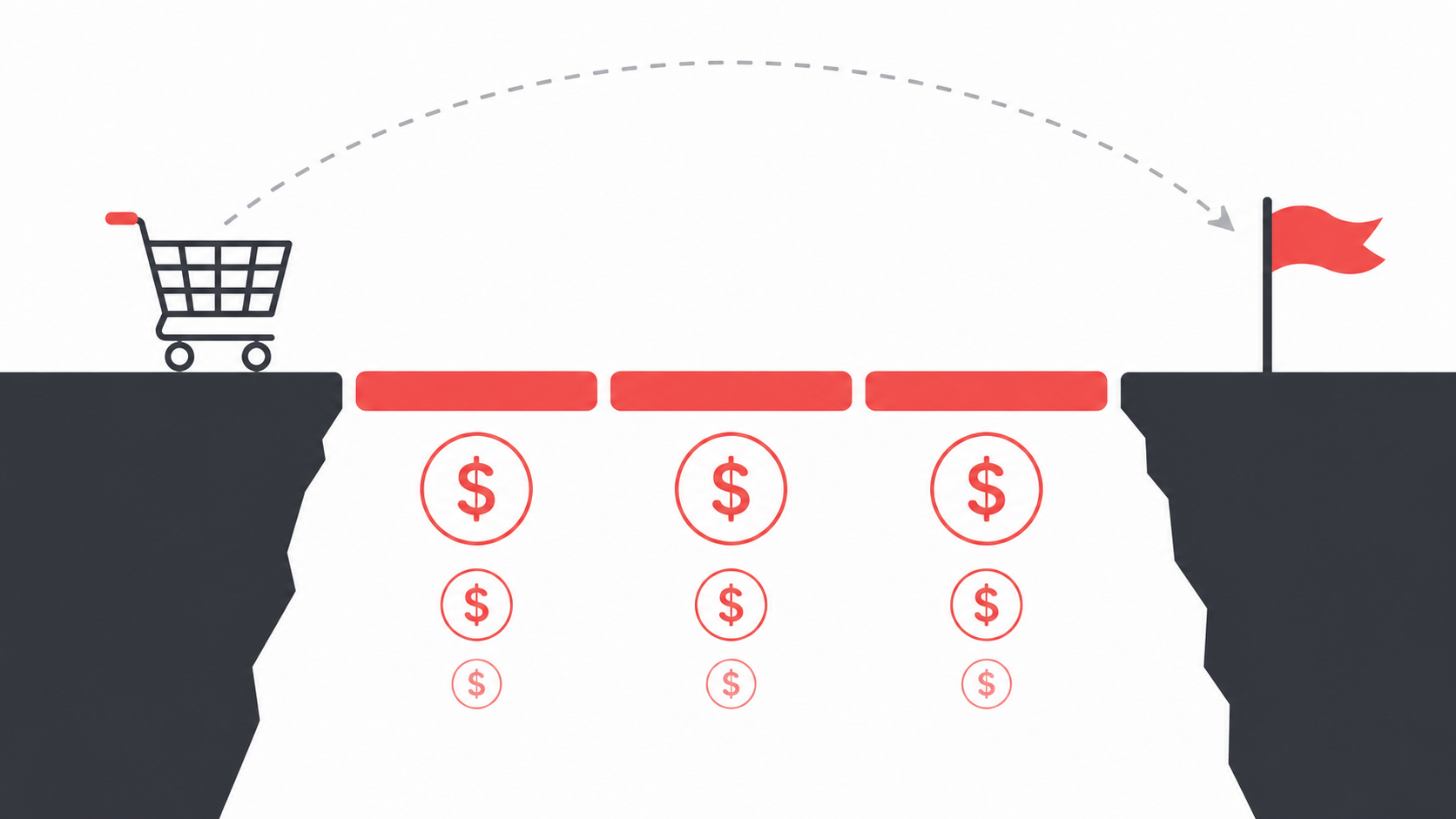
The first reaction to rising acquisition costs is usually the same: cut the budget and wait it out. In the first month, revenue actually holds up. Old SEO rankings keep working, returning customers come back, sales reps close out long deals. It feels like the decision worked.
By month two or three, the flow of new leads drops off. Warehouse, rent, and payroll haven't gone anywhere, and working capital runs out. Then comes the most expensive part: the relaunch. Ad algorithms lose their accumulated optimization history and have to relearn from scratch, while competitors take the search and ad positions you vacated in the meantime. Winning back market share costs more than what you saved by cutting the budget.
There's a flip side too. Simply continuing to pour traffic in at the new, higher prices without changing anything on the site doesn't work either: with CPA up, every abandoned cart costs more than it did last year.
What You're Already Losing, and What It Costs
Let's run the numbers on a hypothetical store. The assumptions here are illustrative — swap in your own figures.
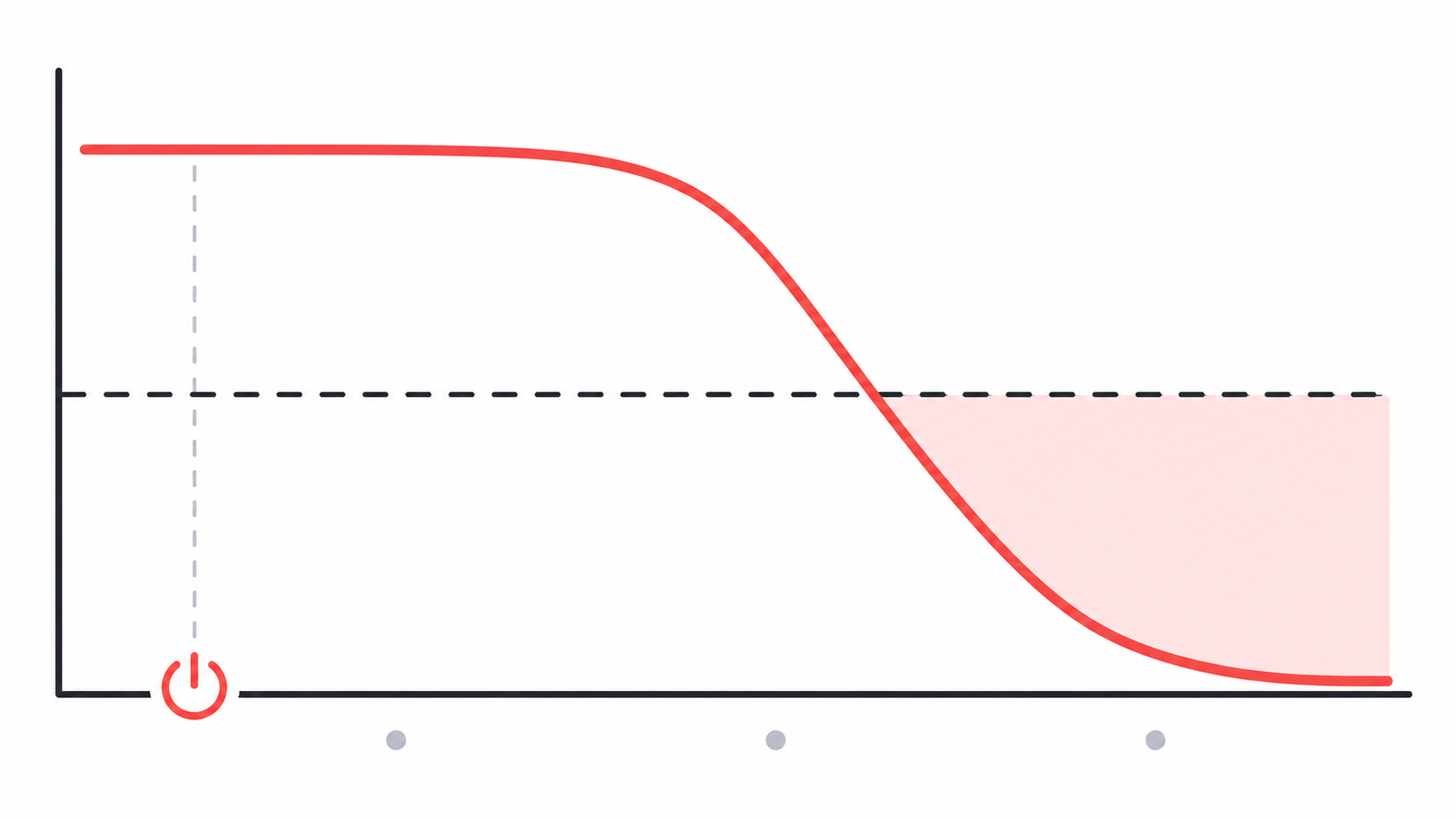
Say shoppers add items to 1,000 carts in a month. According to RetailCRM and YuKassa, the cart abandonment rate in Russian online stores reached 88% in Q1 2026 (up from 85% a year earlier). That means 880 carts go unpaid.
The good news: the conversion rate from abandoned cart to completed order stays fairly high, around 46%. Some people come back on their own, and the return window shrank from 7 days to 2. So roughly 405 of those 880 carts still turn into orders.
The bad news: the remaining ~475 carts turn into nothing. At an average order value of $18 (1,610 RUB), that's roughly $8,550 (765,000 RUB) in lost monthly revenue. And you already paid in full for the traffic that brought those people in — at a price that rose by a third over the year.
Now the other side of the math. A WhatsApp reminder with a discount sent within the first 24 hours recovers up to 8% of abandoned carts; an email recovers 2-4%. Eight percent of 880 carts is about 70 extra orders a month — roughly $1,260 (113,000 RUB) in revenue without spending a single extra dollar on ads. 71% of stores already work with abandoned carts, and 26% of shoppers say they'd come back and finish an order if offered a discount.
It's simple arithmetic, but it changes your priorities. With CPA growing 15-20% a year, fixing the checkout flow pays for itself faster than growing the ad budget by the same amount.
Where the Money Actually Leaks Out
Cart and Checkout
Before you fix anything, it helps to understand that not every abandoned cart is a failure. About 30% of shoppers use the cart as a wishlist — they add items to buy later. The 88% figure looks like a disaster only until you account for that.
A YuKassa survey (2024) on why people don't complete an order:
waiting for a better moment or a sale — 33%;
waiting for payday — 29%;
the final price was higher than expected — 18%;
delivery timing didn't work — 17%;
had to register an account — 8%.
The first two reasons are outside the site's control — you can barely influence them. But the other three, which together account for 43% of drop-offs, are entirely within your control.
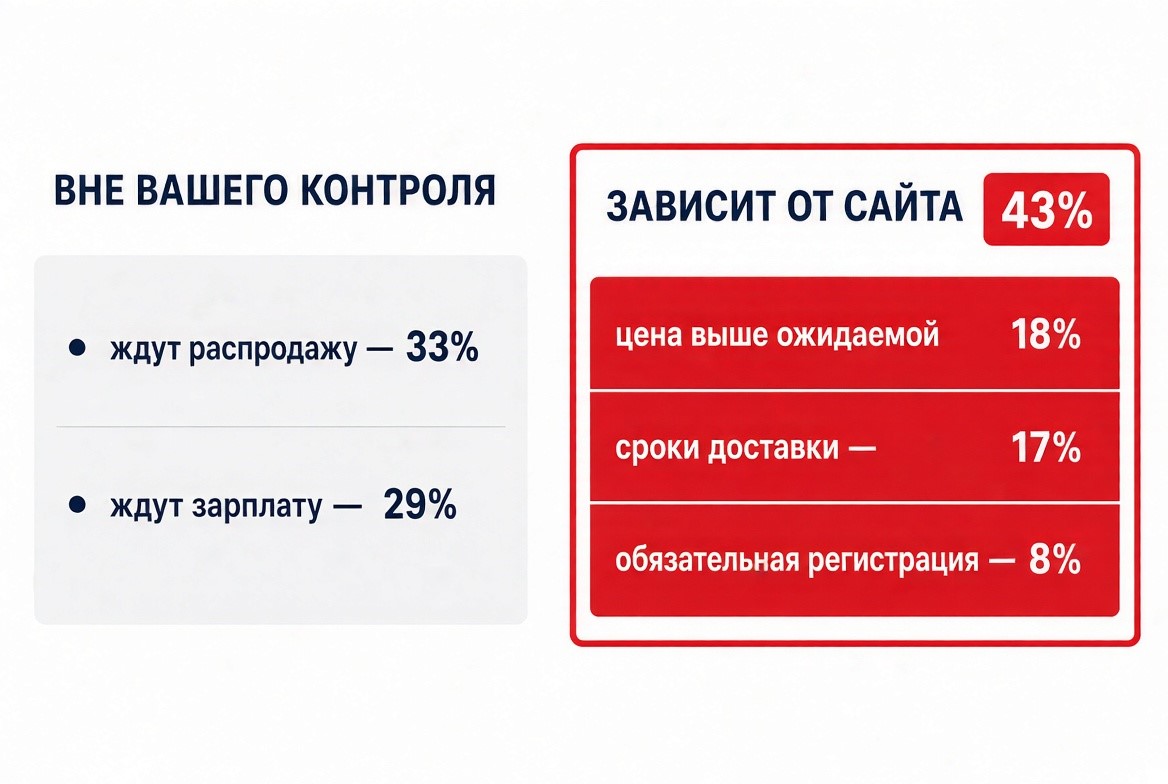
"Final price higher than expected" almost always means shipping costs or extra fees showed up at the last step. "Delivery timing didn't work" often means the customer only saw the delivery window at checkout, not on the product page. And mandatory registration, which many stores still require, turns away one in twelve shoppers.
What to check: is shipping cost and delivery time visible before the customer reaches the cart; how many fields are in the checkout form; can people buy without registering; how many steps stand between the cart and order confirmation; are abandoned-cart recovery flows actually set up, and through which channels.
This matters more for small stores than big ones, by the way. According to RetailCRM, cart checkout drives 65% of revenue for small stores versus 47% for large ones, because larger stores get a meaningful share of orders through phone calls (30%) and chat. If you run a small store, your cart is two-thirds of your revenue.
Here's what that looks like in practice. A B2B store, "Super Instrument," was losing conversions on a 120,000-SKU catalog: prices and stock levels lived in their 1C ERP system, while wholesale buyers saw a generic price list on the site and ended up calling a sales rep anyway. We built a 1C integration covering 40,000 SKUs so the catalog updates itself, plus a client portal where each group of business customers sees its own prices, discounts, and promotions instantly, with no need to ask. An order that used to get assembled over a back-and-forth with a manager is now placed directly on the site. Our development studio ran the project on CS-Cart Ultimate.
Mobile, Not Desktop
According to research by YuKassa and RetailCRM, 65% of Russians shop from a smartphone versus 33% from a computer. 96% of Russians buy something online.
That leads to a fairly blunt conclusion: if your filters, product page, or checkout form are clunky on mobile, you're not losing a slice of your audience — you're losing most of it. The mobile version stopped being a "nice to have" a long time ago.
What to check: walk through the entire purchase path on your own phone, no desktop, no hints. From finding a product to confirming the order. Note every spot where you had to zoom in, mis-tap a button, or go back.
Pay attention to payment methods too. 41% of shoppers pay by card, 23% with e-wallets, 20% via instant bank transfer (Russia's SBP system), 7% cash on delivery. Shoppers rank convenient payment options as the second most important factor in choosing a store, right after price (16% vs. 25%). Missing a payment method people expect is a drop-off at the very last step — the most expensive kind there is.
The Customer Who Never Came Back
With average order value shrinking and CPA rising, the economics increasingly depend on repeat purchases. Average order value in 2025 was $18 (1,610 RUB), down 5% year over year, and Data Insight forecasts a further drop to around $17.30 (1,550 RUB) in 2026. The market is growing through order frequency, not order size.
According to research by Data Insight and Yandex Pay, 87% of online shoppers used loyalty programs in the past year, and 86% received personalized offers. But these offers don't all perform the same way. A trial or exclusive product is seen as useful by 96% of recipients; bonus points around a holiday, by 95%. A generic discount on the next purchase, though, falls flat: 40% of recipients simply don't use it.
The difference is that the first type of offer is built on a specific person's purchase history and interests, while the second is blasted out identically to everyone.
One more number worth keeping in mind if you run an independent store: given equal price and shipping, 34% of shoppers said they'd rather buy from an online store than a marketplace. People go there for the quality, advice, and service a marketplace listing doesn't offer.
What to check: are you capturing purchase history in a usable form; is your customer base segmented; does the offer a repeat customer sees differ from what a new visitor sees.
Dependence on Paid Traffic
Being fully dependent on search and social ads while CPA keeps climbing makes a business fragile: the market sets your acquisition cost, not you. Organic search traffic doesn't create that same dependency. Catalog structure, server speed, filters, structured data, and well-built product pages keep generating orders even in the month you cut your ad budget.
It's worth not confusing two different jobs here. SEO for a marketplace listing and SEO for your own store are different work with different tools. For your own site, what matters is structure, technical health, and usability. A properly optimized online store lowers the share of your revenue that goes to daily click costs.
The second way to cut that dependency is to leave a platform that caps both conversion and organic reach. Electra, a store selling electrolysis equipment, moved from Tilda to CS-Cart before things got bad, not after. On Tilda, they had no real way to manage stock and inventory, and you simply can't build catalog structure for SEO there — the category and filter pages that generate a store's organic search traffic aren't something the builder lets you create. After the move, both of those became possible, along with a properly managed mobile version. Our web development studio handled the migration.
Where to Start When You Only Have One Team
The order of operations isn't about what's trendy — it's about where your losses are most expensive. The logic is simple: fix what stands between a visitor you've already paid for and a paid order first, then work on what lowers acquisition cost going forward.
1. Cart and checkout. The shortest distance to revenue: the customer already picked a product.
2. Mobile version. Two-thirds of your shoppers, and the fixes usually overlap with #1.
3. Site speed and stability. Technical losses don't show up in ad reports, but you pay for them just the same.
4. Abandoned-cart recovery and database work. Delivers results without a bigger budget.
5. SEO and structure. The slowest to pay off, which is exactly why you need to start it before you need it.
AI doesn't get its own slot on this list. It's genuinely good at speeding up the grunt work: generating and enriching product descriptions, meta tags, parsing specs out of supplier price lists. That lowers the cost of maintaining your catalog, but it doesn't replace work on conversion.
A note on method. Any of these five areas is best run in short cycles: hypothesis, quick fix, measure after a week. Without end-to-end analytics connecting a click to an order, a shipment, and a return, you won't be able to tell a fix that actually worked from random noise — and you'll keep paying for traffic your site isn't converting.
Your Plan for the Next Week
Calculate CPA for each channel and compare it against actual order margin, not revenue.
Look at abandoned-cart stats for the last 3 months and split the causes into ones your site controls and ones it doesn't.
Walk through the purchase path on a smartphone and log every point of friction.
Check when the customer finds out about shipping cost and delivery time — on the product page or at the last checkout step.
Make sure an order can be placed without registering an account.
Run one sprint targeting your single most expensive point of loss.
Meanwhile, the market keeps growing. Data Insight's 2026 forecast: roughly $205 billion (15.4 trillion RUB) in volume (+15%), about 10 billion orders (+20%). But that growth comes from a rising number of smaller purchases, with average order value falling and acquisition getting pricier. In that setup, the winners aren't the ones who spent more on ads — they're the ones whose site converts a larger share of the traffic that already showed up. Either way, the place to start is a diagnostic: a technical site audit shows you page speed and errors on key pages, the mobile purchase path, the state of your catalog, filters, and checkout form — and produces a prioritized list of issues, ranked by how much each one is costing you. From there it's clear what you can fix in-house, what to hand off, and where you're losing the most money right now.